
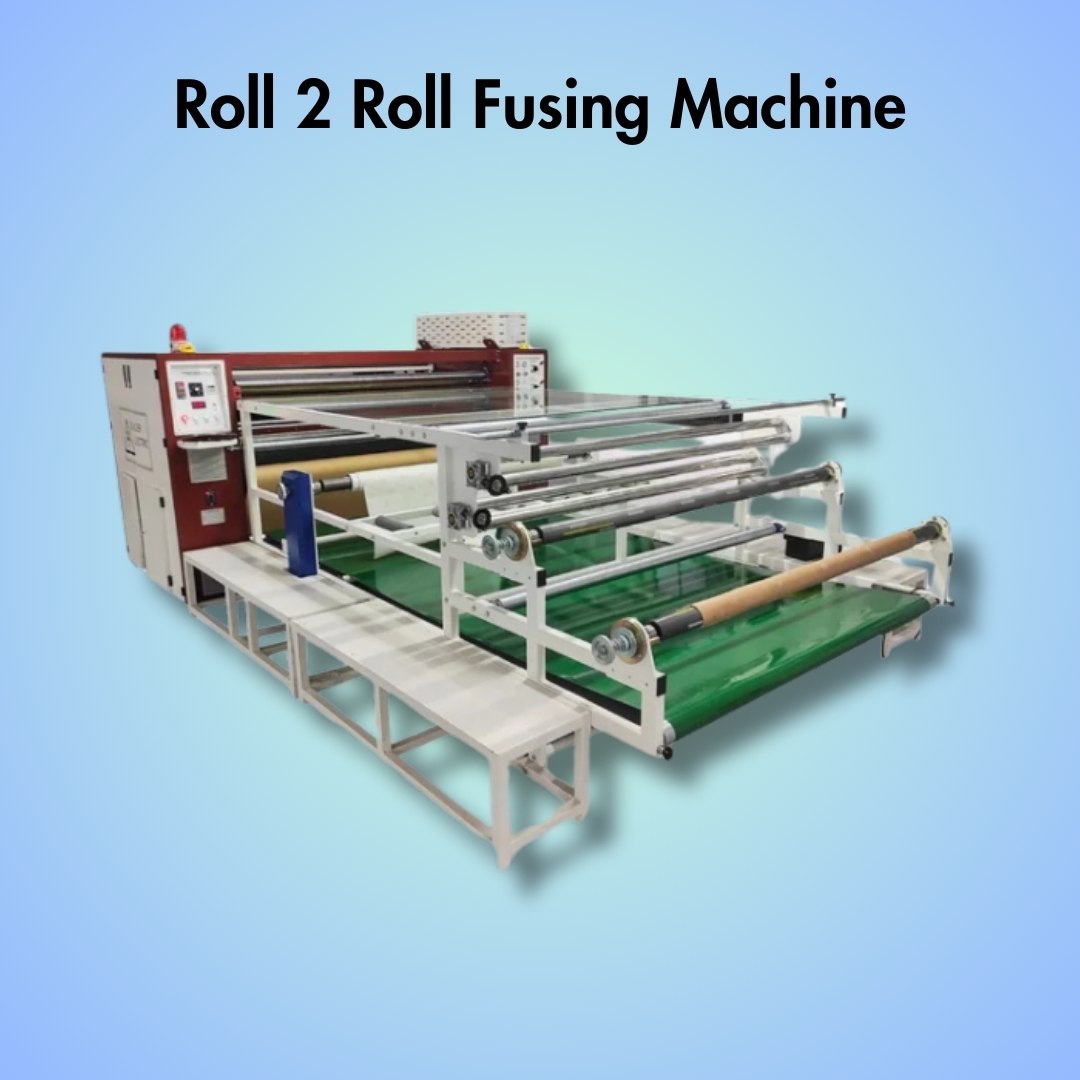
1. Material Feeding – The fabric and interlining (or adhesive layer) are fed into the machine in a continuous roll format.
2. Heating & Pressure Application – The material passes through heated rollers that apply controlled temperature and pressure, activating the adhesive for proper bonding.
3. Cooling & Output – After fusing, the material is cooled and rolled onto another spool for easy handling
✔ High Production Efficiency – Designed for continuous operation, reducing manual effort and increasing speed.
✔ Strong & Uniform Bonding – Ensures consistent heat and pressure, improving fabric adhesion and durability.
✔ Versatile Applications – Works with various fabrics, interlinings, and laminates.
✔ Energy-Efficient – Optimized heating and pressure systems reduce energy consumption.
✔ Adjustable Temperature & Pressure – Allows customization based on fabric type and adhesive requirements
✅ Garment Industry – Bonding interlinings in shirts, jackets, and structured garments.
✅ Lamination & Textile Finishing – Creating waterproof, fire-resistant, or reinforced fabrics.
✅ Home Textiles – Fusing curtains, upholstery, and laminated fabrics.
✅ Technical Textiles – Used in medical, automotive, and industrial fabric production.
⚠ Initial Investment Cost – Requires a high upfront cost for industrial models.
⚠ Material Compatibility – Not all fabrics and adhesives work well; proper selection is crucial.
⚠ Requires Skilled Operation – Temperature, pressure, and speed settings need careful calibration for optimal results.
A Roll-to-Roll Fusing Machine is an essential tool for high-speed and high-quality fabric bonding, offering consistent results and increased productivity in the textile, fashion, and industrial sectors. Its ability to handle large-scale production makes it a valuable investment for manufacturers.